How should we process fear?

We've all feared something at some point in our lives. And, there is always a lingering fear, however small it may be, about the future. A few common examples are:
Anxiety about retirement
Concerns for children's well-being
Career advancement issues
Job uncertainty
Fears about the failure of relationships
Phobias
So, how should we deal with these?
Let us first define Fear.
What is Fear?
Wikipedia defines it as:
"Fear is an unpleasant subjective emotional state arising in response to perceived dangers or threats and which, when experienced, is typically associated with physiological and psychological changes."
Why do we fear? (Recall, Why asking WHY matters)
The most common triggers of Fear are uncertainty (often referred to as FOTU, or Fear Of The Unknown) and phobias. Some fears are deeply ingrained, while others stem from our behavior and can be addressed by making minor adjustments in our environment.
How do we deal with it?
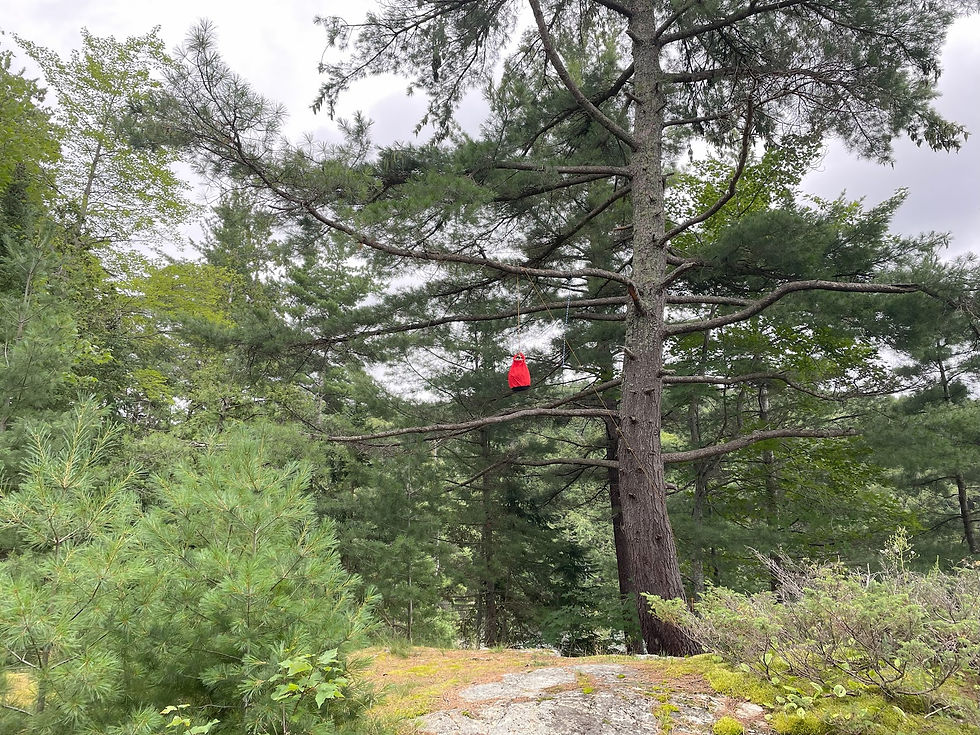
I'd like to share one of my personal fears and how I've managed it. Back in 2009, I went on my first solo overnight hike in Quebec. It was the first day of the season after winter, and the trail was deserted. Knowing that bears were in the area, I couldn't sleep at all that night.
Since that night in 2009, I've intentionally hiked hundreds of KMs alone in the mountains and backcountry. I refused to let Fear control my actions, as I didn't want to miss out on the substantial positive benefits of solo hiking.
These experiences have helped me grow, and I'd have missed out on a lot if I'd let Fear keep me from solo hiking. And while I've seen signs of bears (fresh scat, footprints, etc.), I've never seen a bear in the wild!


Did I get rid of the Fear - Absolutely not. I process it better.
National Geographic estimates the odds of a fatal bear attack at 1 in 2.1 million. This compares to 1 in ~4500 for pedestrian fatalities from car accidents. On a similar note, in the US, ~7000 pedestrians die each year from vehicle accidents, whereas ~60 people died from bear attacks since 1900.
Once I reviewed the facts, I asked myself, "Do I fear walking on the road?" Nope.
Then, should I fear being attacked by a bear? That was the breakthrough.
Even today, when I hike alone, I fear bears. However, this Fear drives me to take precautions, ensuring that I am well-prepared and adhere to all best practices to avoid encounters with wildlife, enabling me to enjoy my hike.
Fear often leads to procrastination, but some fear is necessary to prompt action.
What we need to be careful about is avoiding putting things off out of Fear. Rather, acknowledge it and find a way to process it.
Do you want to talk about your Fears?
Book a complimentary session here.
Talk soon!
Coach Athma
Life Coach
Toronto, Canada